Mindful Movement · Clothing & Accessories
What to Wear for Gentle Movement: A Guide to Comfortable Layers
The right outfit for a slower practice is less about looking the part and more about feeling at ease in your own body. Thoughtful fabrics, a forgiving fit, and one removable layer can make stretches, seated pauses, and transitions feel more comfortable—without asking your clothing to take center stage.
Gentle movement can mean many things: a restorative yoga sequence, mobility work beside the bed, an unhurried stretch between meetings, or a few minutes of breathing and motion before the day begins. Whatever the routine, clothing should let you bend, reach, fold, and pause without constant adjustment. That sounds simple, but details such as a seam at the hip, a waistband that rolls, or a sleeve that slides toward the elbow can become surprisingly noticeable when the pace slows.
Comfortable movement clothing is not a uniform, and there is no single fabric or silhouette that suits everyone. The most useful choices are personal: a texture that feels pleasant against your skin, coverage that helps you relax, and enough room to move without fabric twisting or catching. Treat getting dressed as part of preparing for practice, not as a test of flexibility or a reason to buy an entirely new wardrobe.
This guide looks at the practical details behind breathable fabrics, flexible fits, and layering for practice. It also offers a straightforward way to assess clothes you already own, so you can spend less attention on your outfit and more on the movement itself.
Start with the movements, not the label
Before choosing an outfit, consider what your practice actually involves. A gentle routine may still include a wide range of positions: arms reaching overhead, knees drawing toward the chest, a long seated fold, or time resting on your back. Clothing that feels comfortable while standing may behave differently when you sit or stretch. A top can ride up; trousers may pull at the knees; a hem might bunch beneath your body.
Think through a few movements you expect to do and notice where fabric needs to travel. If your practice includes plenty of floor work, you may value a smooth waistband and a top that stays put when you recline. If it involves shoulder mobility, sleeves need to allow the arms to lift freely. For a mostly seated practice, check that the waist does not dig in when your hips bend. The point is not to anticipate every possible pose, but to notice the places where clothes tend to distract you.
There is no requirement to wear specialist yoga apparel for gentle movement. Soft lounge trousers, a familiar T-shirt, or a lightweight long-sleeved top may work beautifully. Choose for function and comfort rather than assuming a particular garment category is essential. An outfit you can move in confidently is more useful than one that looks athletic but needs frequent pulling, smoothing, or readjusting.
Fabric feel: breathable, soft, and suited to you
Fabric influences how clothing feels against the skin and how it behaves as your body warms or cools. Breathable fabrics can help prevent a clammy feeling, especially when a slow session lasts longer than expected or the room is warm. Lightweight cotton is a familiar option, with a soft hand feel that many people enjoy. Depending on its weave and thickness, however, cotton may hold moisture and take longer to dry than some performance materials. A fine jersey can feel supple, while a heavier knit may feel cozy but warm quickly.
Other fibers and blends each have their own character. Linen is airy and tends to feel cool, though its texture and creasing may not appeal to everyone. Modal and similar regenerated-cellulose fibers often feel smooth and drapey. Stretch fibers blended into a fabric can improve mobility and recovery, but a higher stretch content does not automatically mean greater comfort: a close-fitting garment can still feel restrictive if its cut or waistband is wrong for you.
There is no universal “best” fabric. Skin sensitivity, temperature, personal preference, laundering habits, and the pace of practice all matter. If you are unsure about a garment, wear it for a short stretch at home before relying on it for a longer session. Notice whether the surface feels pleasant after several minutes, whether seams irritate, and whether the material becomes uncomfortable when you warm up.
Care is part of the decision, too. A fabric that feels wonderful but requires a routine you find impractical may not become a regular favorite. Read the garment label, follow its washing instructions, and consider how often you want to do laundry. Gentle movement clothing should fit into your routine, not introduce a complicated one.
Fit is about freedom and reassurance
A comfortable fit gives your body room to move while offering the coverage you prefer. It need not be oversized. Excess fabric can twist, fall toward the face in an inversion, or bunch under the back during floor work. Very tight clothing, on the other hand, may make breathing and bending feel constrained. The right balance is the one that lets you focus without feeling exposed or held in.
For tops, try reaching both arms above your head, rotating your shoulders, and leaning forward. Does the hem stay where you want it? Do the sleeves pull across the upper back? A top that feels secure during these small checks is less likely to become a distraction mid-practice. If you prefer extra coverage, a longer hem or a softly fitted cut can offer reassurance without adding bulk.
For bottoms, test a seated position and a gentle knee bend. A waistband should feel stable without pressing uncomfortably into the abdomen. Check that the fabric has enough give at the hips and knees, and that hems do not drag or catch underfoot. If your routine includes lying down, feel for bulky pockets, drawstrings, or hardware that could press against the body.
Fit can also change with posture and with the garment’s construction. A pair of trousers may feel fine when standing but restrictive when the pelvis tilts forward. A soft knit may stretch out as it is worn. Rather than deciding by appearance alone, move in the garment before practice. Comfort is information: if you repeatedly tug at a sleeve or shift a waistband, that item may be better suited to another activity.
Small construction details make a difference
Seams, waistbands, and hems are easy to overlook on a hanger and easy to notice on the floor. A raised seam along the inner thigh may rub during repeated leg movements. A thick side seam could feel uncomfortable when you lie on your side. If you are sensitive to texture, turn a garment inside out and inspect the stitching, labels, and finishing. A softer seam or removable label may make an old favorite wearable again.
Waistbands deserve particular attention. Wide, soft waistbands often distribute pressure more comfortably than narrow elastic, but the best choice depends on the garment and your body. Check whether the waistband rolls when you fold forward or presses into your abdomen when you sit. Drawstrings can offer adjustability, though a firm knot may be uncomfortable when you lie face-up. If you prefer a drawstring, position it to the side or choose a flatter construction where possible.
Hems can affect balance and comfort. Long trousers that pool around the ankles may become a tripping hazard, while sleeves that slip over the hands can interfere with movement. A cuff can help keep fabric in place, but it should not feel tight. During a quick at-home test, raise your arms, fold forward, and take a few steps. Notice whether anything swings, slips, or catches.
These small observations are not about finding a flawless outfit. They are a way to reduce avoidable distractions and make your clothing feel more supportive of the practice you actually do.
Layering for practice, before and after
Room temperature can shift the experience of a gentle session. You may feel cool when you first sit down, warm after a few rounds of movement, and chilly again during a still, quiet finish. A light removable layer gives you options without requiring a complete outfit change. Think of it as an adaptable part of your setup: easy to take off, easy to put back on, and comfortable to keep nearby.
A cardigan, loose overshirt, or light wrap can work for arriving, settling in, and cooling down. For movement itself, consider whether the garment will stay out of your way. Loose ties may fall forward, open fronts may shift, and long sleeves can cover your hands. You might prefer to remove the layer before a sequence that involves reaching, balancing, or moving onto the floor. Keep it within easy reach so you can put it back on when you pause.
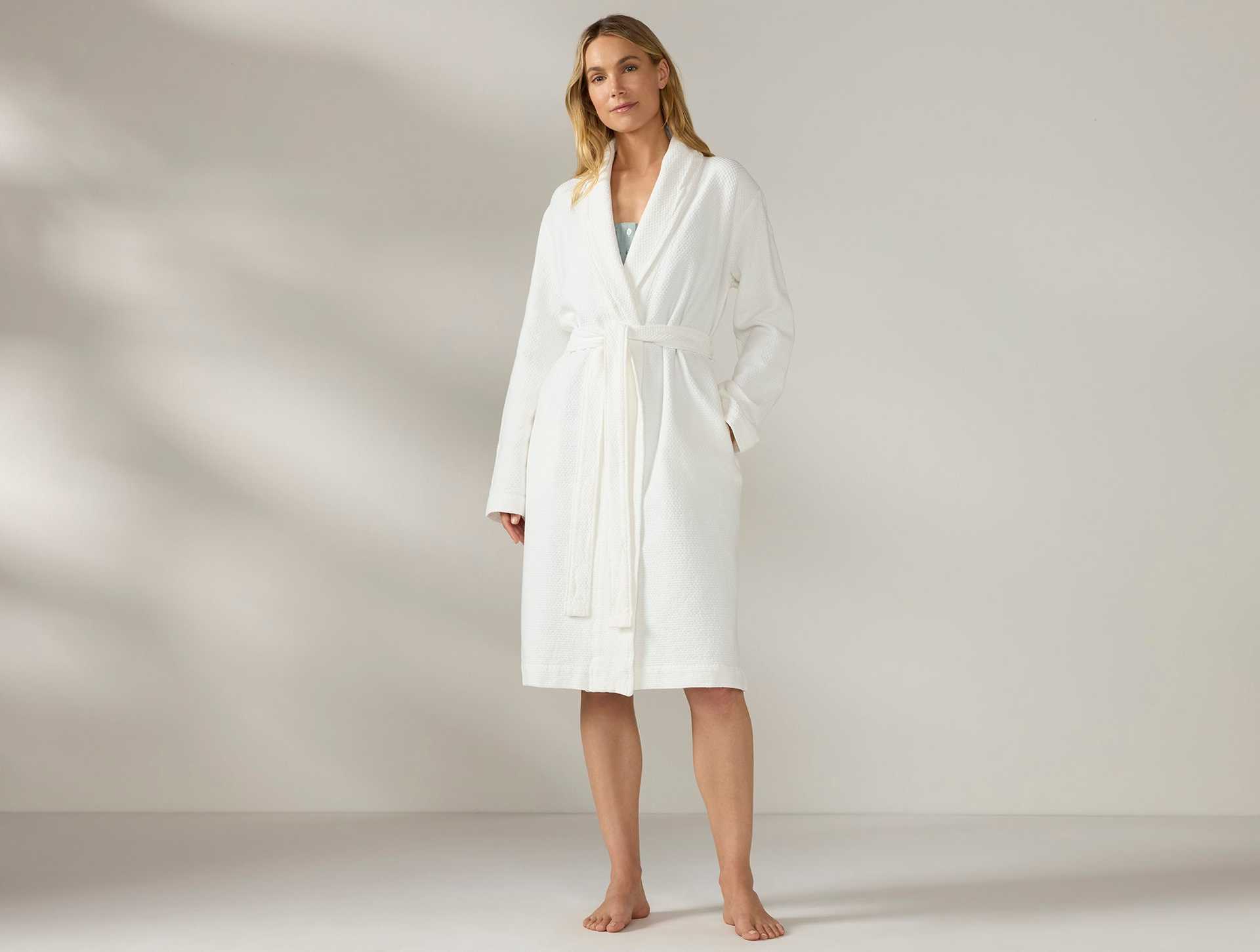
A soft robe can also serve as a comfortable layer around a home practice—particularly while getting ready or after a session—though it is not necessarily designed for active movement. The Women’s Adriatic Organic Robe is made from lightweight organic cotton with a relaxed weave, a waist belt, and on-seam pockets. Those features make it an option for comfort between activities; for movement, choose clothing that stays secure and does not trail or loosen.
Layering is most useful when each piece has a clear role. A close-fitting base layer can stay on as you move, while a softer outer layer helps with warmth during the quieter moments. Avoid adding so many pieces that you feel constricted, overheated, or occupied with rearranging them. The aim is simple adjustability.
Coverage, confidence, and personal preference
Feeling comfortable in clothing includes more than temperature and stretch. Coverage can affect whether you feel at ease folding forward, lifting your arms, or practicing around other people. Some prefer fitted layers that remain close to the body; others find loose silhouettes more comfortable. Neither preference is more correct. The best choice is the one that lets you move with a sense of ease and autonomy.
If a top shifts during forward folds, you might try tucking it in, choosing a longer cut, or adding a base layer that stays in place. If you would rather not wear close-fitting trousers, choose a soft, flexible pair that offers room through the hips and knees, and check that the fabric does not obstruct your steps. For group classes, you can also consider the room’s temperature and whether you will want an extra layer during pauses.
Comfort is individual and can change from day to day. A garment that feels right in a warm room may be less appealing in a cool one; a favorite cut may feel different when you are tired or tender. Allow yourself to make small adjustments. The purpose of clothing is to serve the person wearing it, not to impose a standard on how a moving body should look.
A simple outfit formula
If choosing an outfit feels like one more decision, use a flexible formula rather than a strict dress code. Start with a breathable base layer that feels good against your skin. Add bottoms that allow comfortable bending and sitting. Keep one light layer nearby if the room may feel cool before or after practice. Then do a brief movement check before you begin.
- Base: Choose a top that stays in place when you reach and lean, with a neckline and sleeve length you find comfortable.
- Bottoms: Look for a waistband that does not dig in and fabric that gives easily at the hips and knees.
- Layer: Keep a light cardigan, wrap, or overshirt close by for settling in or cooling down.
- Footwear: Follow the needs of your practice and surroundings. If moving barefoot, make sure the floor is clean, dry, and suitable for your activity.
- Final check: Reach overhead, sit, fold forward, and bend your knees. Adjust anything that pulls, slips, or distracts.
This formula is a starting point, not a shopping list. You may already have everything you need in your closet. Repeating an outfit that works can be useful: fewer decisions, fewer surprises, and more energy for the practice itself.
Build a small, dependable movement wardrobe
A considered wardrobe need not be extensive. A few comfortable pieces that work across different routines are often more valuable than a drawer full of specialized items. Notice which garments you reach for and why. Perhaps a particular cotton top stays cool, or a pair of soft trousers never needs adjusting. Those observations can guide future choices more reliably than a trend or an elaborate set of rules.
When you do need something new, read the fiber content and care instructions, then consider construction and fit as carefully as appearance. Certifications can provide information about standards for particular materials or production processes, but they do not tell you whether a garment will feel comfortable on your body. That judgment is personal. Where possible, try the item on and move in it; if shopping remotely, check sizing and return details before deciding.
Care can extend the life of clothing and help keep familiar pieces ready for use. Wash garments according to their labels, avoid unnecessary high heat, and allow them to dry fully before storing. A well-loved top that remains soft and comfortable may be a more sustainable choice than repeatedly replacing pieces that were never right for your routine.
Let comfort stay uncomplicated
Choosing what to wear for gentle movement is an exercise in attention: where fabric touches, how a seam sits, whether warmth feels welcome, and which details disappear once you begin. Breathable fabrics, a flexible fit, and a removable layer can support comfort through stretches, seated pauses, and transitions. But there is no ideal outfit waiting to be discovered, and clothing does not need to make a practice more impressive to make it more enjoyable.
Start with what feels good, test it in the movements you plan to do, and adjust only where something genuinely distracts you. A soft top, easy-moving bottoms, and a layer within reach are often enough. When clothes offer comfort without demanding attention, they become part of the quiet preparation that lets you meet your practice as you are.